How I Published 13 Medical Papers With No Lab, No Mentor, and No Formal Research Training
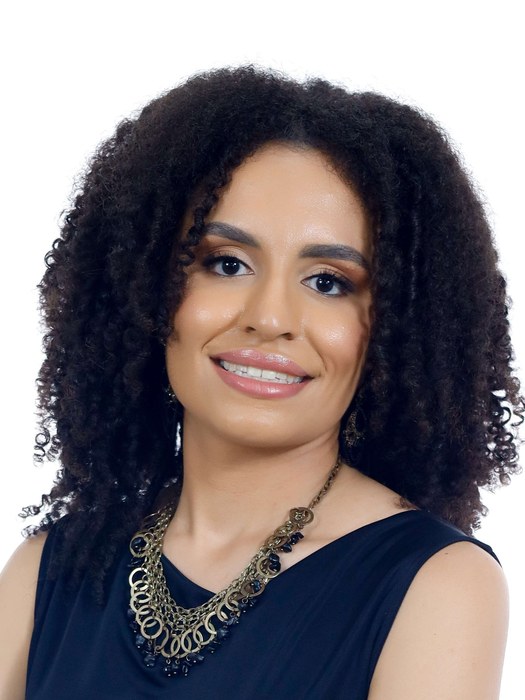 Isadora Mamede
·
maio 14, 2026
·
9 min read
Isadora Mamede
·
maio 14, 2026
·
9 min read

I have loved mathematics since I was a child.
Not in the way people say when they mean they were decent at arithmetic. I mean the kind of love where you sit with a hard problem and feel something close to satisfaction when the logic resolves cleanly. Most of my classmates were running from statistics. I was genuinely curious about what the numbers were actually saying underneath the surface of a paper.
That curiosity did not come with a roadmap.
When I started medical school at the Federal University of São João del-Rei in Brazil, I had one clear instinct: I wanted to do research. What I did not have was any idea how that actually worked. No mentor. No lab. No senior colleague who published. No institutional path that said “start here.”
Thirteen peer-reviewed publications, 20+ conference abstracts, multiple ASCO presentations, and eleven peer reviewer appointments later, I want to write down what that path actually looked like.
Not the polished version. The real one.
Why most doctors never publish, and why that is not the whole story
Here is a number worth sitting with: according to NRMP Match data, matched non-U.S. IMGs averaged 2.1 research experiences and four abstracts in the 2024 cycle. Four. For one of the most competitive applicant pools in medicine.
The ceiling is low because most people assume publishing requires things they do not have: a research lab, a faculty mentor, an NIH grant, a prestigious institution. And many medical schools reinforce that assumption by teaching you what research is without teaching you how to do it.
IMRAD is a structure you hear about once. Statistics is a course you pass and mostly forget. The gap between “I know systematic reviews exist” and “I know how to run one” is enormous, and almost nobody bridges it for you.
What I learned, slowly and through a lot of trial and error, is that the gap is bridgeable. The barriers are not primarily institutional. They are informational.
The project that started everything: a mobile app, no funding, three years
From the third year of medical school onward, our curriculum required a multi-year research project. My group chose something that felt genuinely useful: a mobile application to assist in craniofacial morphology assessment for sleep apnea patients, aimed at improving diagnosis in resource-limited settings where specialist access is severely restricted.
We had no funding. No laboratory. No infrastructure of any kind.
What we had was a clinical question we believed mattered, and a willingness to figure out the mechanics.
I had taught myself JavaScript since I was twelve. Nothing professional, nothing formal. I built small things for the pleasure of building them. It was enough to get started. I learned React Native, Node.js, Python, and TensorFlow specifically for this project, almost entirely through documentation and online tutorials at odd hours. I learned R because the statistical analysis required it, and R turned out to be one of the most important skills I have built.
Three years after we started, we had a published paper in Sleep and Breathing: a reliability study of the mobile application for craniofacial measurement. It also produced a related systematic review on two-dimensional facial photography for sleep breathing disorders in the same journal.
Three years is a long time. But that project taught me every foundational skill I now use: how to design a study, how to write a protocol, how to run statistical analyses I had to teach myself from scratch, how to write a manuscript that survives peer review, and how to respond to reviewers in a way that does not sink the paper.
I did not learn any of it from a course. I learned it by doing it badly and then doing it better.
The courses that did not help, and the mindset shift that did
While that first project was grinding forward, I tried to learn the craft of medical publishing more deliberately. I took several scientific writing courses. None were particularly useful. They taught writing in a general sense, which I could already do. They did not teach me how to write a methods section, a results paragraph, or a cover letter to a journal editor. Generic writing instruction and scientific writing are almost entirely different disciplines.
The course that genuinely changed things was one focused on research methodology and meta-analyses. Not because it gave me a certificate (I actually never got mine). Because it showed me for the first time what was happening underneath the surface of the papers I had been reading.
Why studies are pooled in particular ways. What effect sizes actually represent. How to read a statistical model rather than just cite its output. How to look at a forest plot and understand what the heterogeneity is telling you about the studies being pooled.
That was the shift that mattered. Not any single methodology. The understanding that research has an internal logic, that statistics is not a black box, and that the logic is learnable.
Everything after that came from building on that foundation — deliberately, one skill at a time.
Cold emails, conferences, and the skill nobody told me to build
Once I had a clearer grasp of research methodology, I needed opportunities to apply it. Those did not arrive on their own.
So I sent cold emails.
I wrote to physicians and researchers whose published work overlapped with questions I was already thinking about. Not asking for jobs or funding. Offering something specific: quantitative skills and analytical capacity, in exchange for the opportunity to collaborate and contribute to published work.
Most people did not reply. Some replied and nothing came of it. A few replied and things moved forward, and those few connections changed the direction of everything.
I met researchers at conferences in Brazil who invited me into original research projects. One connection led to another. The network built itself, slowly, from genuine usefulness.
What I noticed consistently was this: the skill people valued most was not writing ability. It was not familiarity with methodology. It was the ability to actually understand the quantitative side of research — to look at a dataset, choose the right analytical approach for the specific question being asked, run it correctly, interpret the output accurately, and explain what it means to a collaborator who has never opened a statistical program.
A lot of clinicians can write. Many have now been exposed to research methods at some level. But comparatively few can look at a clinical question and reason through the appropriate study design, or understand why one statistical model fits the data structure better than another, or recognize when an analysis has been run incorrectly in a paper they are reviewing.
That gap is where I found traction. Not because any single method is the key, but because quantitative reasoning in medicine is genuinely rare, and rare skills create leverage.
The projects I have contributed to span survival analysis, network analysis, Bayesian modeling, and standard frequentist statistics. The common thread is not a single methodology. It is the willingness to understand what each method is doing and why — and to keep building that understanding across different contexts.
What it actually looks like from the inside
I want to be precise about what this involved, because the abstract number obscures the reality.
Thirteen papers happened across roughly three years, while practicing clinically full time, studying for USMLE Step 1, completing a postgraduate program in data science, and doing all of it in the margins of a schedule that was already full. Late evenings. Early mornings before clinic. Weekends in R.
I peer review for eleven journals now. I have a patent filed from the sleep apnea project. I presented at ASCO. I have a book chapter. None of that required an institution behind me. All of it required three things:
Building skills with depth, not just surface familiarity. There is a meaningful difference between someone who has run an analysis by following a tutorial and someone who understands why a particular model was chosen, what its assumptions are, and what the output actually means in clinical terms. Reviewers can tell the difference. Collaborators can tell the difference. Build the understanding, not just the workflow.
Sending cold emails and accepting that most will not reply. The mathematics are not glamorous. You contact twenty people, two respond, one collaboration eventually produces something. That ratio is normal. Do not stop sending.
Patience with a long timeline. The sleep apnea app took three years. Publishing is slow. Peer review is slow. Network building is slow. That is simply how this works, and knowing it in advance makes it easier to stay.
And I am still learning a new research skill every day.
Why this blog exists — and what comes next
Medtown exists because the path I just described should not have been as unclear as it was.
R is free. PubMed is free. PROSPERO registration is free. The methodology of every type of study you will encounter as a clinical researcher is documented in publicly accessible guidelines and handbooks. The barrier to meaningful medical research is not money or institutional affiliation.
It is knowing where to start.
I am going to write about all of it here: how to design a research question, how to choose the right study design for your question, how to build a search strategy, how to run different types of statistical analyses in R and Python with code you can actually use, how to write each section of a manuscript, how to find collaborators, how to choose a journal, and how to understand what you are doing quantitatively rather than just executing steps you found in a tutorial.
That last part is the most important thing I can say here. Do not only copy the code. Understand what it is doing. If you do not know why you chose a particular model, you will not be able to defend it when a reviewer pushes back. You will also miss the cases where the standard workflow is the wrong tool for your specific question.
Start with R. It is the language of medical research, and the investment pays off faster than anything else you will do as a clinician-researcher. Learn the statistics before you learn the software. The software is just the implementation.
If you are a medical student, an IMG, or a practicing physician who wants to publish and does not know where to start — this blog is for you. The free ebook below covers the full publishing process, from research question to accepted manuscript, including a complete introduction to statistical analysis in R. It is the guide I would have handed myself in my third year of medical school.
Start there.
Enjoyed this article?
Subscribe for more — and get the free ebook when you sign up.